Freedom is a verb
Freedom is not an ideal state to be achieved, but something unfinished — something we must keep making, taking and becoming. From Shaheen Bagh to the Cockroach Janta Party, protest reminds us that democracy does not protect itself. This Independence Day, Pratyusha Pan asks what it means to keep showing up for freedom, and for the Constitution that makes it possible.
This is the name of a song by the Berlin-based Yiddish punk musician Daniel Kahn that keeps circling back to one refrain: that freedom is not an ideal state to be achieved; it is always something unfinished. Something you have to keep making, keep taking, keep becoming, over and over, for as long as you intend to stay free. The moment you start treating freedom like a thing you have, rather than a thing you do, you've already started losing it.
Which brings us to a question this year's Independence Day particularly forces on us: what does it actually mean to protest?
We asked this question before, loudly, in the winter of 2019 and 2020, when a citizenship law turned into a referendum on who gets to belong to this country, and Shaheen Bagh became shorthand for a kind of stubborn, tricolour-waving defiance. We're asking it again now, in 2026, in a stranger and funnier register. A satirical students' outfit named itself after an insult flung at unemployed youth by a sitting Chief Justice, put on cockroach costumes, camped at Jantar Mantar, and turned a paper-leak scandal into the biggest headache the government has faced in years. Tear gas, lathi charges, a 26-day hunger strike, and a name that refuses to be embarrassed by the very contempt it was born from.
Between Shaheen Bagh and the Cockroach Janta Party lies the same instinct: the idea that a document, a court order, a Parliament, or a Constitution — none of it protects you automatically. You have to keep showing up for it.
Angela Davis insisted that freedom is a constant struggle, not a prize to be won and pocketed, but a condition you have to keep fighting to hold on to, generation after generation. Hannah Arendt, writing in the aftermath of revolutions that both succeeded and curdled, argued that freedom was something that only existed in the act of appearing together in public, arguing, disagreeing, building something new in the space between people. You couldn't be free alone in a room. You had to go outside and do it with others, in public, where it could be seen and contested. Paulo Freire, writing from a very different context of literacy classrooms in Brazil, saw freedom as something that had to be conquered, not handed down, because a freedom given to you by your oppressor was never really freedom at all; it was a more comfortable leash.
Slovenian poet Boris A. Novak, writing for Ukraine in the days after the 2022 invasion, wrote a poem also titled Freedom Is a Verb:
Freedom is not the frozen memory of the monument
Freedom is not a slogan of the political establishment
Freedom is not a mode of payment in the legal code
Freedom is not an empty meaning of the noun in the wordage
Of the Cambridge Dictionary of the English Language
Freedom is the loudest whisper, a wing, a windy message.
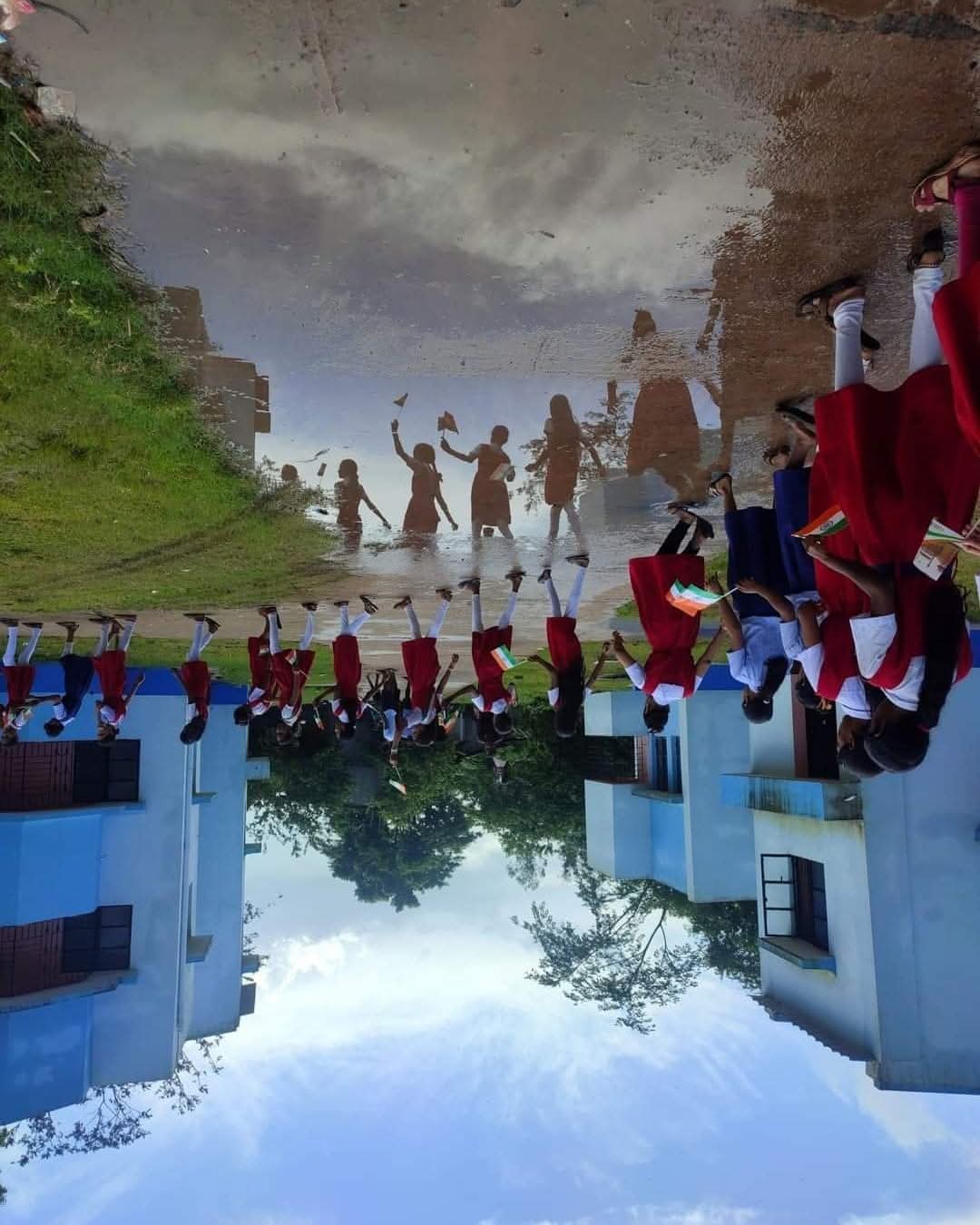
And this is exactly what our Constitution was built to do. The makers of the Constitution, drafting and redrafting across nearly three years, who had just watched an empire dissolve and a subcontinent partition itself, built a document that could be amended. A living document deliberately unfinished, built with the humility to know that the people who wrote it could not possibly anticipate everything the people who'd live under it would need. Ambedkar himself warned the Assembly on its final day that political democracy without social and economic democracy was a contradiction we were choosing to live with, and that we'd have to keep working to resolve it. The Constitution could survive being imperfect, as long as we kept showing up to argue with it and hold it accountable.
That's the whole trick, really. No state of power lasts forever, and a point will, inevitably, come when people will have had enough of that and bring it down. There will be a change of hands, and eventually, it will all build up again. Rinse, repeat. The beauty of our Constitution is that, by channelling this anger into electoral structures, it minimises the violence and ensures that the bloodshed that would otherwise have occurred in this exchange is kept to a minimum. It behoves us, as Indians, as humans, to respect its sanctity.
In time, the revolution will come. It will not be perfect. Nor will whatever replaces the current state. We will make do, as we have done. We will take to the streets again.
References
Freedom Is a Constant Struggle: Ferguson, Palestine, and the Foundations of a Movement by Angela Davis.
On Revolution by Hannah Arendt.
Pedagogy of the Oppressed by Paulo Freire.