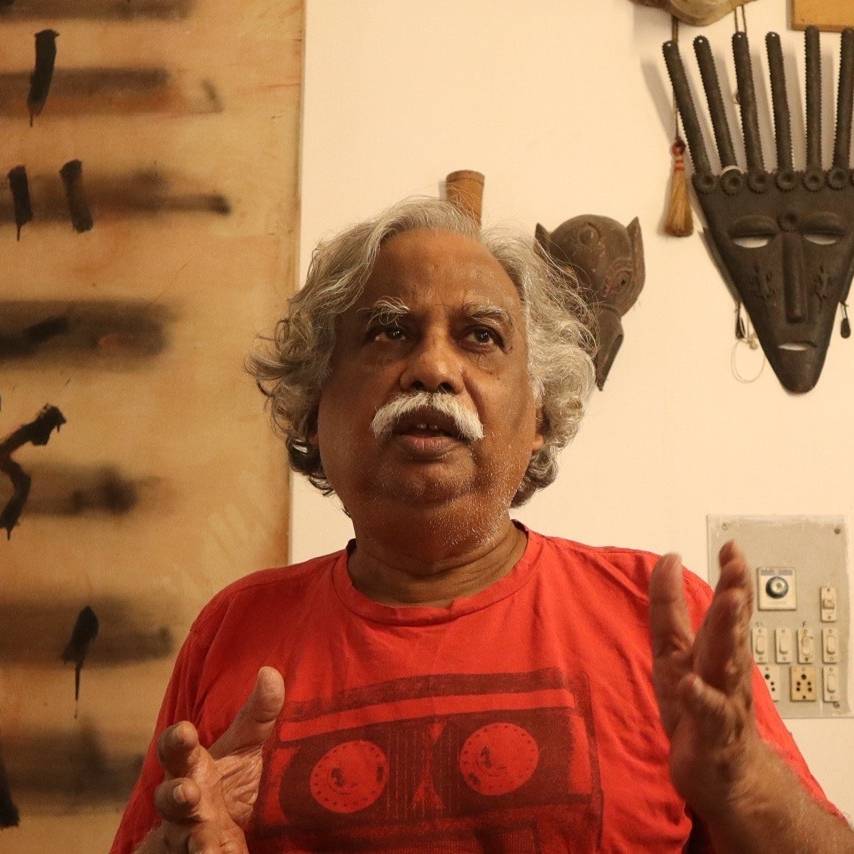
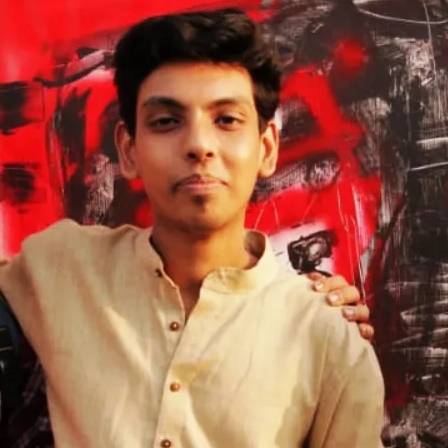
I would spend the whole morning following him around: Hiran Mitra
Jogen Chowdhury death: From following Jogen Chowdhury through the forests of Kharagpur as a schoolboy to sharing an artistic journey spanning decades, an artist recalls the friendships, creative collaborations and enduring memories that shaped his relationship with one of India's finest artists.
Hiran Mitra remembers his long association with Jogen Chowdhury
I first met Jogen Chowdhury towards the end of the 1950s, when I was still in school. I was very keen on painting in those days. I had been drawing since I was very young, for various reasons, and art had already become a strong interest of mine.
There was an older friend of mine, Harbhushan Mal, who lived near Kharida Bazar in Kharagpur. He has since passed away. He was a student of sculpture at the Government College of Art and Craft and Jogen Chowdhury was slightly senior to him.
Harbhushan Mal, whom I knew through family connections and regarded as an elder brother, had been close to Jogen Chowdhury since childhood. That was how I got to know him. In those days, Jogen Chowdhury and several other artists would come to the area near our house during the summer and winter vacations. There was a rule at our government school that we had to submit paintings for our examinations and we usually made these during the holidays. Jogen Chowdhury would come to Kharagpur for this reason and I would get to see him.
Kharagpur was quite close to Kolkata and travelling there did not cost much. It was easy to make the journey.
There were several Adivasi villages around us then and many of them are still there. Jogen Chowdhury and the other artists would visit these villages and wander through the forests and surrounding areas, painting as they went. I would go along with Jogen Chowdhury and draw too. I would spend the whole morning following him around. We used to make what are called watercolour sketches. He would work in watercolours as well and was extremely good at it.
He was one of the most accomplished students at the Government College of Art and Craft, good enough to win a gold medal. His hand was very sure and he was exceptionally skilled. Watching him paint was a great learning experience for us. It certainly was for me and I learnt a lot from him.
I joined the Government College of Art and Craft in 1961, the same year he graduated. I was very close to some of his contemporaries, including Sunil Das, Dhiraj Chowdhury and Anita Roy Chowdhury. But even after I came to Kolkata and finished college, my association with Jogen Chowdhury continued. We remained in touch.
I am also good friends with his younger sister. Her husband, Mihir Chakraborty, is a very close friend of mine. In fact, he was the one who first gave me the news this morning. Jogen-da used to take an active part in many of our activities. He would attend our programmes and seminars and participate in them in various ways.
In the 1970s, Jogen Chowdhury started a magazine called Nandimukh, which is still published today. He was its founding editor. He also wrote poetry and other pieces. I have some of the old issues of Nandimukh in my collection.
Gradually, a whole community grew around the magazine. Poets, painters and sculptors came together and we became something of a family. Jogen Chowdhury was the person who held that family together.
In Shahid Nagar, Dhakuria, where the Chowdhury family originally lived, a house was established through Jogen Chowdhury's efforts and support. It came to be known as the Nandimukh house. Various programmes are still held there. My close association with Jogen Chowdhury continued through all these activities.
Later, he started Swad. I went to Santiniketan to take part in artists' workshops and we continued to visit Nandimukh regularly. We also organised various annual events, which we called colloquia. Jogen Chowdhury would take an active part in these. Many of them were held in Santiniketan and Jogen-da would come there repeatedly.
I visited his house and worked with him. I also have many of his works in my collection. Jogen Chowdhury has always been present in our lives, particularly in our lives as artists. That presence will continue to remain with us.
Jogen Chowdhury also did some sculptural work. One of his sculptures came out of a workshop we organised around the figure of Banalata Sen. Our artists' collective, Open Window, took the initiative to organise the sculpture workshop, during which Jogen Chowdhury made a sculpture of Banalata Sen. It was later cast in bronze.
This may be considered his last sculpture, at least so far. He fell ill after that and could no longer continue working. But he had completed this work and it was cast in bronze.