John Locke (1632–1704): The blank slate who would not stay blank
He spent a lifetime insisting the human mind arrives blank, then died as empirically as he had lived — asking an old friend to stop reading him the Psalms because he had, by his own account, had quite enough experience for one lifetime. John Locke — Restoration physician, Whig fugitive, reluctant amanuensis to a slaveholders’ constitution, and the philosopher who gave the Enlightenment its working vocabulary of consent — was born in a Somerset village on 29 August 1632 and turns, this month, a startling 394. Between a king’s execution he may have watched as a schoolboy and a Declaration of Independence he never lived to read, his was a life that moved, as this piece does, not in a straight line but in jolts.
A Philosopher for a birthday nobody quite remembers to send a card for......
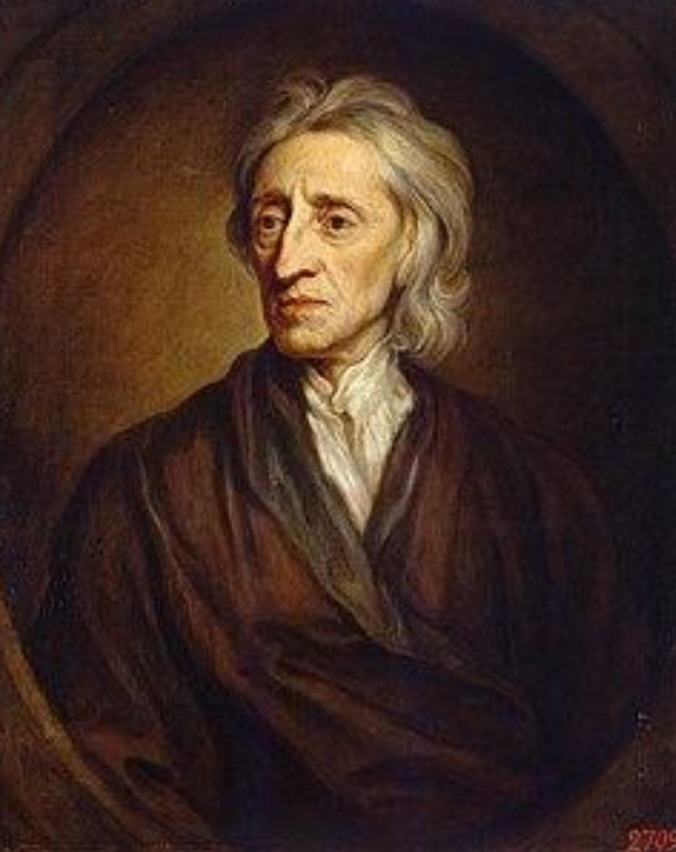
A formal 1697 portrait of John Locke by Sir Godfrey Kneller
Exit, Pursued by a Psalm
Let us begin on the wrong end of the story, as memory always insists on doing: Oates Manor, Essex, the 28th of October, 1704, where an asthmatic old bachelor lies propped on pillows while Damaris Masham — philosopher, friend, landlady of his final fourteen years — reads him the Psalms in a voice steadied for the occasion. He is seventy-two. He has spent a lifetime insisting that the mind arrives in this world as a tabula rasa, a blank slate, innocent of Plato’s furniture and Descartes’ certainties — and now, rather wonderfully, rather cruelly, that same slate is about to be wiped clean again, this time for good. Somewhere between one Psalm and the next, he asks her to stop. He has, we are told, had quite enough experience for one lifetime. It is difficult to imagine a more perfectly Lockean way to die: empirically, on the evidence, and without excessive metaphysical fuss.
Now — jolt — rewind seventy-two years, to a Somerset village called Wrington, 29 August 1632, where a Puritan attorney’s wife has just produced a son destined to be quoted by American revolutionaries, Enlightenment salons, and, several centuries later, faintly bewildered undergraduates trying to distinguish ideas of sensation from ideas of reflection the night before an exam. On 29 August 2026, that infant turns a startling 394. He does not look a day over natural rights—though, at his age, even a philosopher may be forgiven a nap and a freshly wiped slate.
Cut again — because this is not a life that proceeds tidily from cradle to grave; it proceeds, like the man’s own epistemology, by accumulated jolts of experience, one impression striking against another until something like a self coheres. Whitehall, 1649. A sixteen-year-old Locke, schoolboy at Westminster, stands a ten-minute walk from the scaffold where Charles I loses his head to Parliament’s axe and his crown to the abstract, terrifying new idea that kings might answer to their subjects rather than to God alone. Young Locke almost certainly watched. History does not record whether he flinched. It does record that he spent the rest of his life quietly working out the theory that would make such regicide not an outrage but, under the right circumstances, a civic duty — the notion that governments exist by consent, and that a government which breaks its trust may, like a spoilt marriage or an unpaid tenant, be lawfully evicted.
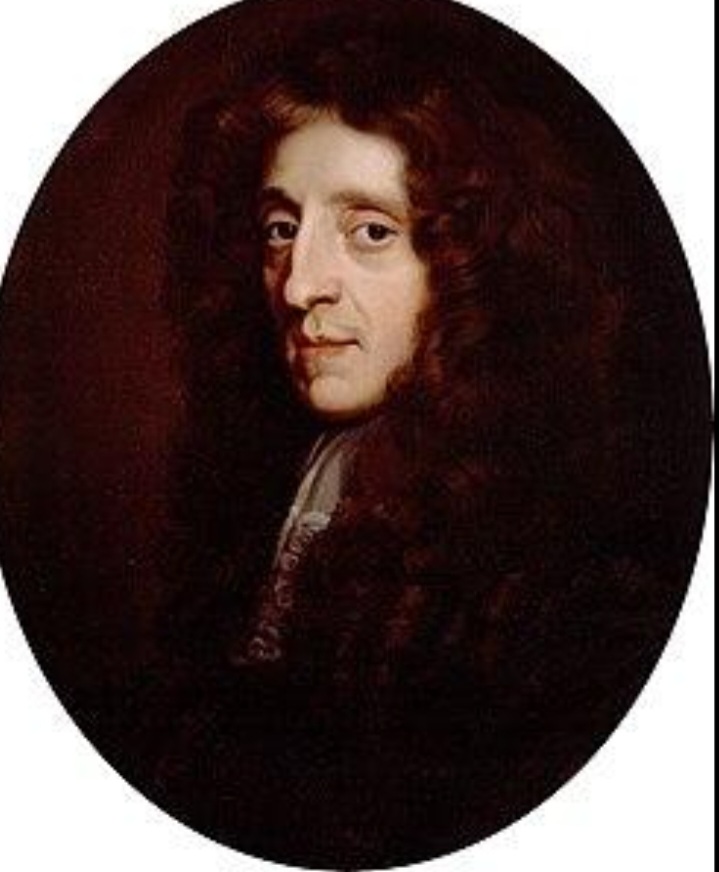
John Locke, earliest known portrait, John Greenhill c. 1672-73
Oxford, Shaftesbury, and the Carolina Problem
But we are getting ahead of ourselves, which is, appropriately, exactly what this essay intends to do. Fast-forward to Oxford, where young Locke— bored rigid by Scholastic disputation, a curriculum he found about as nourishing as chewing parchment — discovered instead the company of Robert Boyle (1627–1691) and the pleasures of the air-pump, and drifted, almost by accident, into medicine. He would spend his whole career being underestimated as merely a physician, when in fact it was precisely his physician’s habits — watch the patient, not the textbook; trust the symptom over the system — that would furnish English philosophy with its most stubbornly empirical mind. In 1668 those habits paid off spectacularly: Locke assisted in draining an abscess on the liver of one Anthony Ashley Cooper (1621–1683), later the Earl of Shaftesbury, in an operation so dangerous it might reasonably have doubled as an audition for the role of villain in a Jacobean revenge tragedy. Shaftesbury survived. Locke, who had just saved the life of the most important patron he would ever have, had also, without quite meaning to, signed himself up for the next thirty-five years of English political drama.
Here the plot thickens in ways Locke’s admirers have long found awkward and his critics have found delicious. As Shaftesbury’s secretary, Locke drafted the Fundamental Constitutions of Carolina (1669), a document granting Carolinian planters absolute power and authority over his negro slaves. He held stock, briefly, in the slave-trading Royal African Company. It is the great, uncomfortable footnote to the man who would declare slavery so vile and miserable an estate of man that it could hardly be conceived that any Englishman should plead for it. Was the philosopher of liberty, then, merely liberty’s landlord — happy to rent the concept out selectively? The honest answer is messier and more interesting than either the hagiography or the indictment allows: Locke was a minor functionary drafting his patrons’ wishes as a lawyer drafts a client’s will, and within a few years he had sold his shares, fled a king he despised, and spent his later career on the Board of Trade quietly dismantling the very land-bounty schemes that had rewarded colonists for buying slaves — scrawling, beside one favourable Virginia ruling, the two words Well Done. Hypocrisy makes for a punchier headline than moral evolution. History, tediously, tends to prefer the latter.
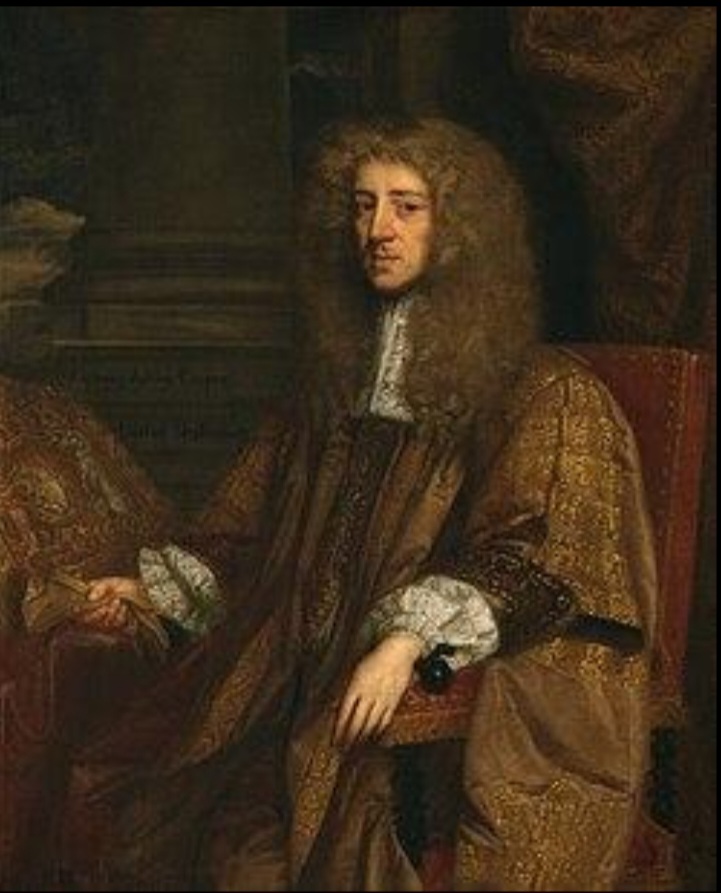
Locke’s patron, Anthony Ashley Cooper, 1st Earl of Shaftesbury, portrayed by John Greenhill, c. 1672–73.
Exile, Return, and the
Question of Self
Exile followed — Holland, 1683 to 1689, Locke skulking about under the alias 'Dr Van Linden' like a philosopher auditioning for a spy novel, dodging extradition while quietly finishing the Essay Concerning Human Understanding and drafting the Letter Concerning Toleration. One almost pities the Stuart agents assigned to tail a fugitive whose only crime was thinking, very slowly and very carefully, about epistemology.
Then the Glorious Revolution of 1688 obligingly arranged for his return, and Locke — in a single triumphant, anonymous flourish in 1689–90 — unloaded onto an unsuspecting world the Essay, the Two Treatises of Government, and the Letter Concerning Toleration, three books that would between them furnish the vocabulary of modern liberalism: that knowledge is built, brick by sensory brick, from experience rather than handed down as innate furniture; that political authority rests on consent, not divine inheritance; that the state has no business policing a man’s private conversation with his God. Somewhere Voltaire was taking notes and would later canonise him as le sage Locke. Somewhere a Virginian planter named Jefferson was, decades hence, about to borrow his cadences — life, liberty doing very Lockean work indeed — for a Declaration that would outlive them both.
Pause here for a small metaphysical intermission, because Locke could not resist one either. Book II of the Essay asks a question that would keep philosophers — and, four centuries later, more than one bewildered graduate seminar — up at night: what makes the man dying in Essex the same person as the boy who watched a king lose his head at Whitehall? Not the soul, Locke insists, rather scandalously for a Puritan’s son; souls could in principle be swapped like hats and nobody would notice the difference. What stitches a self together across sixty years of storms, exiles, false names, and liver operations is consciousness — the thread of memory recognising its own earlier stitches. It is a theory built, one suspects, by a man who had rather too much experience of not being who he used to be: the Oxford don became the Whig conspirator became the Dutch fugitive became the elder statesman of English liberty, and somehow, against the mechanics of his own philosophy, it was all one person, answerable for the lot. Consciousness, Locke seems to be muttering from beyond the Latin epitaph, is a debt you cannot discharge by changing your name.
The Mind as an Empty Cabinet: On Ideas and Experience
Locke opens the Essay Concerning Human Understanding by demolishing, with the unhurried thoroughness of a man dismantling a rival’s card table, the comfortable seventeenth-century assumption that certain ideas — the existence of God, the axioms of mathematics, the basic furniture of morality — simply arrive in the mind pre-installed, courtesy of the manufacturer. Nonsense, says Locke: if these ideas were truly innate, they would have to appear in every mind without exception, and yet children, idiots (his word, not this essay’s), and entire non-European societies whom English travel-writers had dutifully catalogued seemed to potter about quite happily without them. The mind, Locke concludes, begins as a tabula rasa — not an empty room, exactly, since it comes fully wired with capacities, appetites, and the irrepressible itch to think, but an empty cabinet, handsomely shelved, waiting for the delivery van of experience to arrive before it has anything worth storing. Everything we know, however grand, is eventually traceable to sensation (the world knocking on the door) or reflection (the mind noticing its own knocking about) — simple ideas first, then compounded, sorted, and occasionally muddled into the complex ones we mistake for self-evident truths.
Locke claims:
No man’s knowledge here can go beyond his experience.
(An Essay Concerning Human Understanding, Book II, Ch. 1)
It is a modest-sounding claim that turns out to have rather large teeth. If knowledge cannot outrun experience, then no one — not a bishop, not a king, not a Fellow of Christ Church holding forth on first principles — is entitled to certainty he has not earned the hard way. Locke’s own working style was, revealingly, that of the physician he was trained to be rather than the system-builder he is sometimes mistaken for: watch, record, revise, and treat any theory that outruns the evidence with the polite suspicion one reserves for a diagnosis made before the patient has finished describing the symptoms.
There is not so contemptible a plant or animal, that does not confound the most enlarged understanding…. The workmanship of the all-wise and powerful God, in the great fabric of the universe, and every part thereof, farther exceeds the capacity and comprehension of the most inquisitive and intelligent man, than the best contrivance of the most ingenious man does the conceptions of the most ignorant rational creatures.
(An Essay Concerning Human Understanding, Book III, Ch. VI)
This is, whatever else it is, a philosophy of intellectual humility dressed up as epistemology — which is why Locke reserves some of his driest contempt not for the ignorant but for the confidently dogmatic: the men who mistake the fashion of an opinion for its truth, and who, once a habit of thought is established, treat custom as though it were sacred.
The imagination is always restless and suggests a variety of thoughts, and the will, reason being laid aside, is ready for every extravagant project; and in this state, he that goes farthest out of the way, is thought fittest to lead, and is sure of most followers: And when fashion hath once established, what folly or craft began, custom makes it sacred, and it will be thought impudence or madness, to contradict or question it. (First Treatise of Government)
It is a fine description of a common-room argument, a national referendum, and a Twitter pile-on, delivered three hundred and thirty-odd years before any of the three existed in their current, degraded form. Locke would, one suspects, have found the internet an excellent case study and a very poor place to think.
No Consent, No Crown: Locke’s Quiet Revolution in Social Contract
Locke’s social contract is really just Hobbes’s nightmare rewritten by a more optimistic tenant. Where Hobbes needed a Leviathan to save men from tearing each other apart in the state of nature, Locke’s state of nature was already a going concern — reasonably peaceful, tolerably fair, and governed by a natural law that everyone could, in principle, work out for themselves without a monarch reading it aloud to them. The trouble was enforcement: no judge, no police, no one to stop the inevitable disputes over whose cow ate whose turnip. So people agreed, contractually and reversibly, to hand a slice of their natural liberty to a government whose entire job description was to protect the life, liberty, and property they already owned before it showed up — which is why Locke could write, with the placid confidence of a man stating the obvious, that government has no other end than the preservation of property (Second Treatise of Government, Ch. VII, sec. 94). It is less a divine covenant than a very long-term lease, and the moment the landlord starts burning down the building — taxing without consent, ruling by whim, treating wherever Law ends as an invitation rather than a warning (sec. 202) — the tenants are, on Locke’s reading, entitled to break it and find a better landlord. Two centuries on, a Virginian with a talent for paraphrase would rename the lease a Declaration.
If Book II of the Essay quietly demolishes the authority of kings to dictate what their subjects may know, the Second Treatise of Government demolishes, considerably less quietly, their authority to dictate what their subjects must obey. Locke borrows Thomas Hobbes’s stage-set—a state of nature prior to government—and redecorates it entirely. Hobbes’s state of nature is a knife-fight in a dark room; Locke’s is closer to a well-run allotment association: people already possess reason and property, and already owe one another the courtesy of not being murdered, before any government has been invented to enforce the point.
The state of nature has a law of nature to govern it, which obliges every one: and reason, which is that law, teaches all mankind, who will but consult it, that being all equal and independent, no one ought to harm another in his life, health, liberty, or possessions. (Second Treatise of Government, ch. II, sec. 6)
Government, therefore, is not a gift bestowed from on high but something closer to a service contract: people consent to be governed so that their pre-existing rights—life, liberty, and estate—may be better protected than they could manage alone. A government that keeps its end of the bargain is legitimate. One that does not is, whatever its crown or pedigree, in breach—and the people are entitled to cancel the subscription:
Men being, as has been said, by nature all free, equal and independent, no one can be put out of this estate, and subjected to the political power of another, without his own consent. (Second Treatise of Government, ch. VIII, sec. 95)
For a man frequently accused of writing dry constitutional prose, Locke could turn a genuinely wicked phrase against absolute monarchy—the Stuart-friendly notion that a people wronged by their king have nowhere to appeal. His verdict is less a philosophical argument than a small, perfectly aimed piece of ridicule:
This is to think that men are so foolish that they take care to avoid what mischiefs may be done them by polecats or foxes, but are content, nay, think it safety, to be devoured by lions. (Second Treatise of Government, ch. VII, sec. 93)
When government turns predator, Locke does not counsel patient suffering. He grants—carefully, and without the enthusiasm his French successors would bring to the subject a century later—a right of rebellion, or, as he rather grandly calls it, an appeal to heaven: the final resort of a people who have run out of earthly judges.
The people have no other remedy in this, as in all other cases where they have no judge on earth, but to appeal to heaven: for the rulers, in such attempts, exercising a power the people never put into their hands . . . do that which they have not a right to do. (Second Treatise of Government, sec. 168)
Locke’s political philosophy can finally be compressed into two characteristically sharp propositions: Wherever Law ends, Tyranny begins, while 'the end of law is not to abolish or restrain, but to preserve and enlarge freedom' (secs. 202, 57).
It is not, on reflection, a very great distance from appeal to heaven to 'We hold these truths to be self-evident'—which is presumably why a Virginian planter with a gift for cadence and a weakness for other men’s sentences found Locke’s Second Treatise such profitable reading eighty-odd years later. Jefferson borrowed the furniture and rearranged the room; the deed to the property, so to speak, remained in Locke’s name.
Freedom of Conscience, Terms and Conditions Apply: On Toleration
Locke’s Letter Concerning Toleration is, by the standards of the age that produced it, a genuinely radical document: the argument that the magistrate has no business policing his subjects’ souls, because no magistrate—however convinced of his own orthodoxy—can produce evidence sufficient to justify forcing another man’s conscience. Since certainty about the one true religion is, on Locke’s own epistemology, simply not on offer to finite creatures, coercion in matters of faith is not merely unkind but epistemically illegitimate: a magistrate enforcing belief is a man pretending to knowledge he cannot have.
So far, so admirable, and so—one might think—complete. It is here that Locke’s toleration turns out to come with the small print everyone skips. Catholics need not apply, on the theory that a subject who owes blind obedience to an infallible pope abroad cannot simultaneously be trusted as a loyal Englishman at home; and atheists need not apply either, since a man with no God to answer to has, in Locke’s view, no oath worth taking.
Papists are not to enjoy the benefit of toleration, because, where they have power, they think themselves bound to deny it to others. . . . [They] owe a blind obedience to any infallible pope, who hath the keys of their consciences tied to his girdle. (An Essay on Toleration (1667), quoted in Mark Goldie, ed., Locke: Political Essays Cambridge University Press, 1997)
One hesitates to call the founder of religious liberty a hypocrite—it is, after all, a cheap shot available to anyone with a search engine and no patience for context. Locke was arguing, in a country that had spent much of the century murdering itself over exactly this question, that the scope of toleration should be radically enlarged, not that it should be made infinite. But it is difficult, reading the small print, not to feel that the great apostle of no certainty, therefore no coercion had rather more certainty about popes and unbelievers than his own epistemology strictly entitled him to. Even the blank slate, it turns out, arrived with a few things already chalked on the corner.
In the Salon of Madame Geoffrin in 1755, painted by Anicet Charles Gabriel Lemonnier around 1812, imagines a reading of Voltaire‘s The Orphan of China in Madame Geoffrin’s celebrated Parisian salon. Although Locke had died half a century earlier, his intellectual presence hovers over this Enlightenment gathering: his empiricism, defence of toleration and insistence upon government by consent profoundly influenced Voltaire and helped furnish the philosophical vocabulary through which Europe questioned inherited authority.
The Physician’s Prescription: Empiricism as a Habit of Mind
It is tempting, and not entirely wrong, to treat Locke’s epistemology, his politics, and his theory of toleration as three separate books someone happened to bind together. But there is a single temperament running underneath all three, and it is the temperament of the sickroom rather than the seminar room. Years of watching Sydenham take detailed, unglamorous notes at a patient’s bedside—rejecting grand theory whenever it contradicted what was actually in front of him—left Locke with a settled, almost professional distrust of anyone, physician or prince, who claimed to know in advance what was best for someone else.
He that in physick shall lay down fundamental maxims and from thence drawing consequence and raising dispute shall reduce it into the regular form of a science has indeed done something to enlarge the art of talking . . . but if he hopes to bring men by such a system to the knowledge of the infirmities of men’s bodies, he is [much mistaken]. (Locke, quoted in Richard Gunderman, John Locke: Physician, Philosopher, and Defender of Freedom)
Swap physick for politics or religion and the sentence does not need a single word changed to remain exactly true to Locke’s purpose. The maxim-layers of medicine, the divine-right theorists of monarchy, and the dogmatists of the pulpit are, for Locke, the same species of overconfident man wearing three different coats: each has mistaken the tidiness of his system for evidence of its truth, and each would do considerably less damage if he simply admitted how little, in the end, any of us can know for certain.
And so, flash-forward once more, to the 29th of August, 2026: 394 candles, give or take, on a cake nobody baked, for a mind that arrived blank and left the world thoroughly, permanently written upon — by kings beheaded, patrons rescued, slaves both defended and betrayed, and finally by his own stubborn, sceptical, magnificently unfinished insistence that no one, however exalted, gets to tell another person what to think without first winning their consent. It is a fittingly unglamorous note on which to end a philosophy: not a grand system at all, but a bedside manner, extended — with occasional, very English, lapses of nerve — to the whole of human life. The old man in Essex who asked Damaris Masham to stop reading him the Psalms because he had had quite enough experience for one lifetime was not, on reflection, being flippant. He was, to the very last, taking his own prescription.
References:
Brewer, Holly. “Slavery-Entangled Philosophy: Does Locke’s Entanglement with Slavery Undermine His Philosophy?” Aeon, 12 Sept. 2018, https://aeon.co/essays/does-lockes-entanglement-with-slavery-undermine-his-philosophy. Accessed 30 Aug. 2026.
Connolly, Patrick J. “John Locke (1632–1704).” Internet Encyclopedia of Philosophy, https://iep.utm.edu/locke/. Accessed 30 Aug. 2026.
The Fundamental Constitutions of Carolina: March 1, 1669. The Avalon Project, Lillian Goldman Law Library, Yale Law School, https://avalon.law.yale.edu/17th_century/nc05.asp. Accessed 30 Aug. 2026.
Greenhill, John. John Locke. 1672, oil on canvas, National Portrait Gallery, London. National Portrait Gallery, https://www.npg.org.uk/collections/search/portrait/mw03962/John-Locke. Accessed 30 Aug. 2026.
Gunderman, Richard. “John Locke: Physician, Philosopher, and Defender of Freedom.” Econlib, 4 Dec. 2023, https://www.econlib.org/library/columns/y2023/gundermanlocke.html. Accessed 30 Aug. 2026.
Hobbes, Thomas. Leviathan. Edited by Richard Tuck, rev. student ed., Cambridge UP, 1996.
“John Locke.” Wikipedia: The Free Encyclopedia, Wikimedia Foundation, https://en.wikipedia.org/wiki/John_Locke. Accessed 30 Aug. 2026.
Kneller, Godfrey. Portrait of John Locke. 1697, oil on canvas, State Hermitage Museum, St. Petersburg. Wikimedia Commons, https://commons.wikimedia.org/wiki/File:Godfrey_Kneller_-Portrait_of_John_Locke(Hermitage).jpg. Accessed 30 Aug. 2026.
Lemonnier, Anicet Charles Gabriel. Lecture de la tragédie de L’Orphelin de la Chine de Voltaire dans le salon de Madame Geoffrin [In the Salon of Madame Geoffrin in 1755]. 1812, oil on canvas, Musée national des châteaux de Malmaison et de Bois-Préau, Rueil-Malmaison. POP: Plateforme ouverte du patrimoine, Ministère de la Culture, 15 July 2024, https://pop.culture.gouv.fr/notice/joconde/00000095103. Accessed 30 Aug. 2026.
Locke, John. An Essay Concerning Human Understanding. Edited by Peter H. Nidditch, Clarendon Press, 1975.
Locke, John. “An Essay on Toleration.” Locke: Political Essays, edited by Mark Goldie, Cambridge UP, 1997, pp. 134–59.
Locke, John. A Letter Concerning Toleration. Edited by James H. Tully, Hackett Publishing, 1983.
Locke, John. Two Treatises of Government. Edited by Peter Laslett, rev. student ed., Cambridge UP, 1988.


