The Mahi Way: How M.S. Dhoni rewrote the IPL playbook
CSK’s Thala bids farewell, leaving behind a legacy of unforgettable moments sparked by unconventional thinking.
Everyone knew that the end was near, but nobody could quite predict the ending. On November 17, all predictions became moot as Mahendra Singh Dhoni formally ended his 18-year Indian Premier League (IPL) career. Not with a match-winning six or a game-changing stumping, nor with a cheeky post-match interview with Harsha Bhogle. But with a social media montage, probably self-edited, set to the tune of Main Har Ek Pal Ka Shayar Hoon. Six years ago, Dhoni had announced his retirement from international cricket in similar fashion, except the song of choice back then was Main Pal Do Pal Ka Shayar .
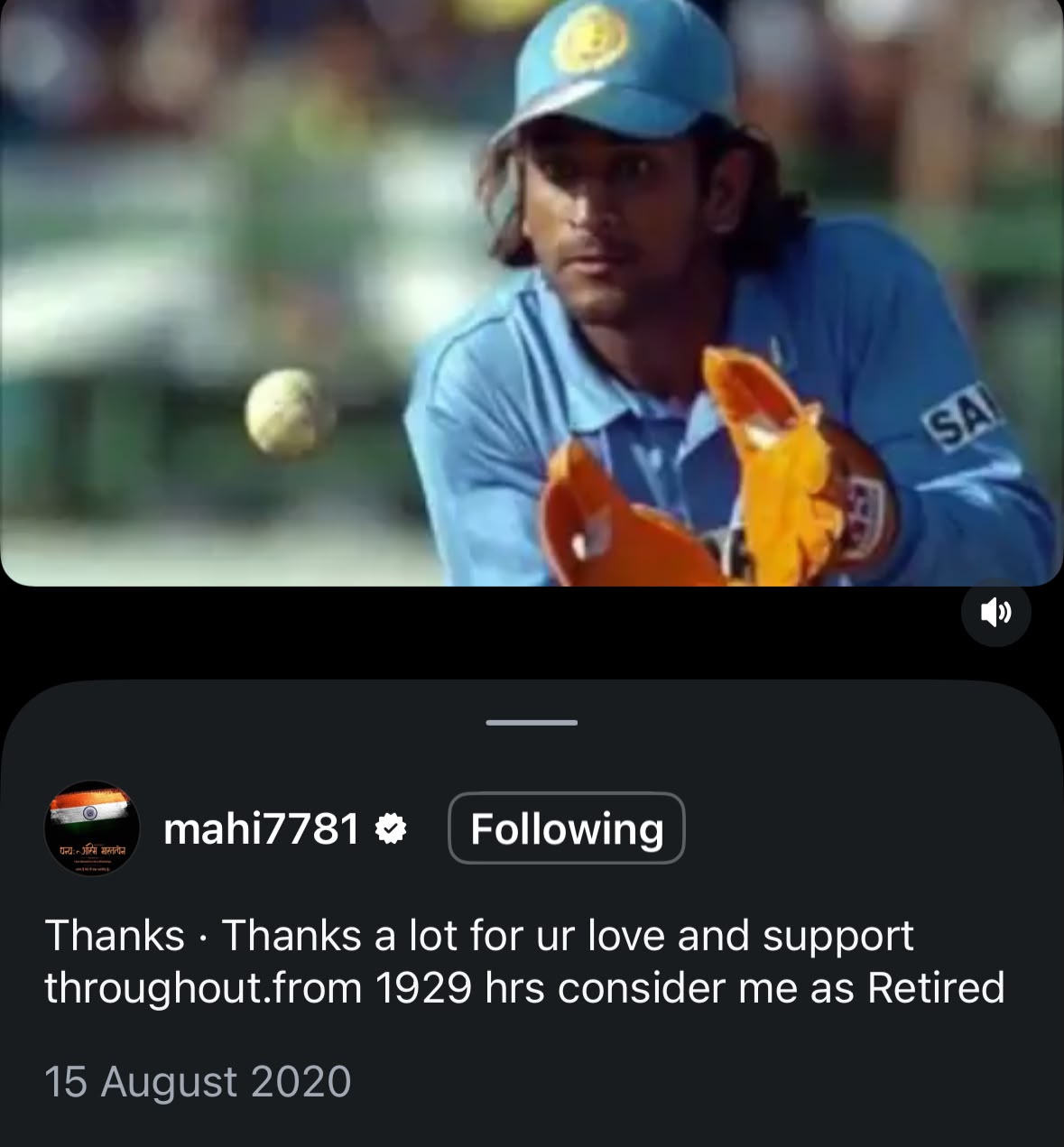
15 August 2020: India's Independence Day and MS Dhoni's retirement post
The difference between lyrics feels appropriate (‘I’m a poet of all moments’ versus ‘I’m a poet of a few moments’). Dhoni’s place in Indian cricket is one among a pantheon of greats. But when it comes to CSK, Dhoni was both Team CSK and Brand CSK — the Thala of the franchise’s most memorable moments. Now, in the next chapter of his association with the five-time IPL winners, he will function as a mentor, supporting the coaching staff led by Zaheer Khan.
As the cricket world reacted to the news that has felt inevitable since 2024, it emerged that the CSK ownership was still counting on Dhoni as part of the team’s future as recently as last week. They had only found out about Dhoni’s decision to quit on video conference, through a suggestion from the man himself to include his name in the list of players set to be released ahead of the 2027 IPL season.
After months of debating if he could play another season, having missed the entirety of IPL 2026 due to injury, Dhoni walks away as the most decorated IPL captain of all time. He led his team to 11 IPL finals, winning five of them, alongside two Champions League titles. To underline the longevity of his CSK tenure, one need only recount that he played against both Sanath Jayasuriya as well as Vaibhav Sooryavanashi, two swashbuckling openers separated in age by 42 years! Dhoni’s impact with the bat late on is evident in the 844 runs he scored in the final (20th) over of an IPL innings across his career, at a staggering strike rate of 243.20. Behind the stumps, Dhoni’s 201 dismissals are an IPL record, as are his 47 stumpings.
The numbers can go on and on. Dhoni’s real legacy, though, lies not in stats, but in his style. Above all, in his habit of writing his own rules, which allowed him to remake the IPL playbook.
Inventing positions, techniques and formulas
I remember being baffled towards the latter stages of the 2010 IPL final. Kieron Pollard was in his element and the Mumbai Indians (MI) threatened to seize the game away from CSK’s grasp. That’s when I saw CSK’s Matthew Hayden placed virtually behind Albie Morkel in a bizarre straightish mid-off, as Morkel ran in to bowl to Pollard. As it turned out, it was no mistake from Hayden. Dhoni had deliberately manoeuvred the Australian there, given Pollard’s tendency to hit the ball dead straight. And Dhoni, of course, was dead right. No sooner had Hayden’s angles been improvised than Pollard was dismissed, caught by Hayden. Vindication for Dhoni’s inspired choice to create his own fielding manual.
A year earlier, at Durban’s Kingsmead, Dhoni had used three spinners against a Kings XI Punjab lineup with five left-handers in their top seven. This was unheard of in South African conditions, but once again, Dhoni’s bet paid off, as the spinning triumvirate combined for six wickets in 12 overs at the expense of just 38 runs.
Dhoni’s spin-to-win mantra worked wonders once more in the 2011 final, as Chris Gayle, arguably the fiercest batter in T20 cricket at the time, was tamed with the new ball by a young off-spinner in Ravichandran Ashwin.
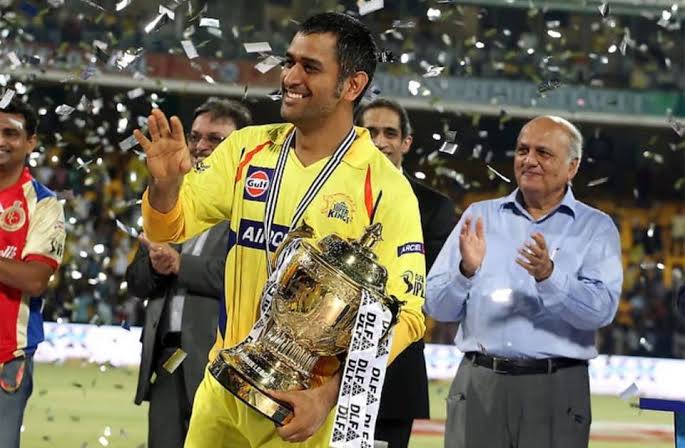
Dhoni defends the IPL title as CSK's captain (2011).
With bat in hand, Dhoni was one of the pioneers of the T20 tactic of deciding one’s batting number based not on the batting order, but on the number of balls left. This meant that he sometimes featured in the top order and, especially during his later years, entered the fray as low as number eight.
As for his technique, which had never been by the book, the late-stage Dhoni, ironically, reprised his pre-IPL avatar of bludgeoning the ball from the get-go. The version from the mid 2000s that, combined with his flowing locks, had warmed the hearts of countless cricket lovers, including former Pakistan President Pervez Musharraf. This gunslinger approach paid dividends in the IPL, too, as Dhoni’s fastest-scoring season in the competition came in 2024, when he struck at 220.54, hitting 14 fours and 13 sixes.
As a keeper, Dhoni had devised his own adage long ago: don’t collect the ball, just snatch it. No cricketing text book would have advocated this, but Dhoni’s methods brought unparalleled results. In 2018, when CSK’s strength and conditioning coach Ramji Srinivasan introduced a Dynavision machine, designed to test hand-eye coordination and visual reaction times, one of Dhoni’s stumpings was clocked at 0.25 seconds. According to Srinivasan, Dhoni’s reflexes were comparable with those of a Formula One driver.
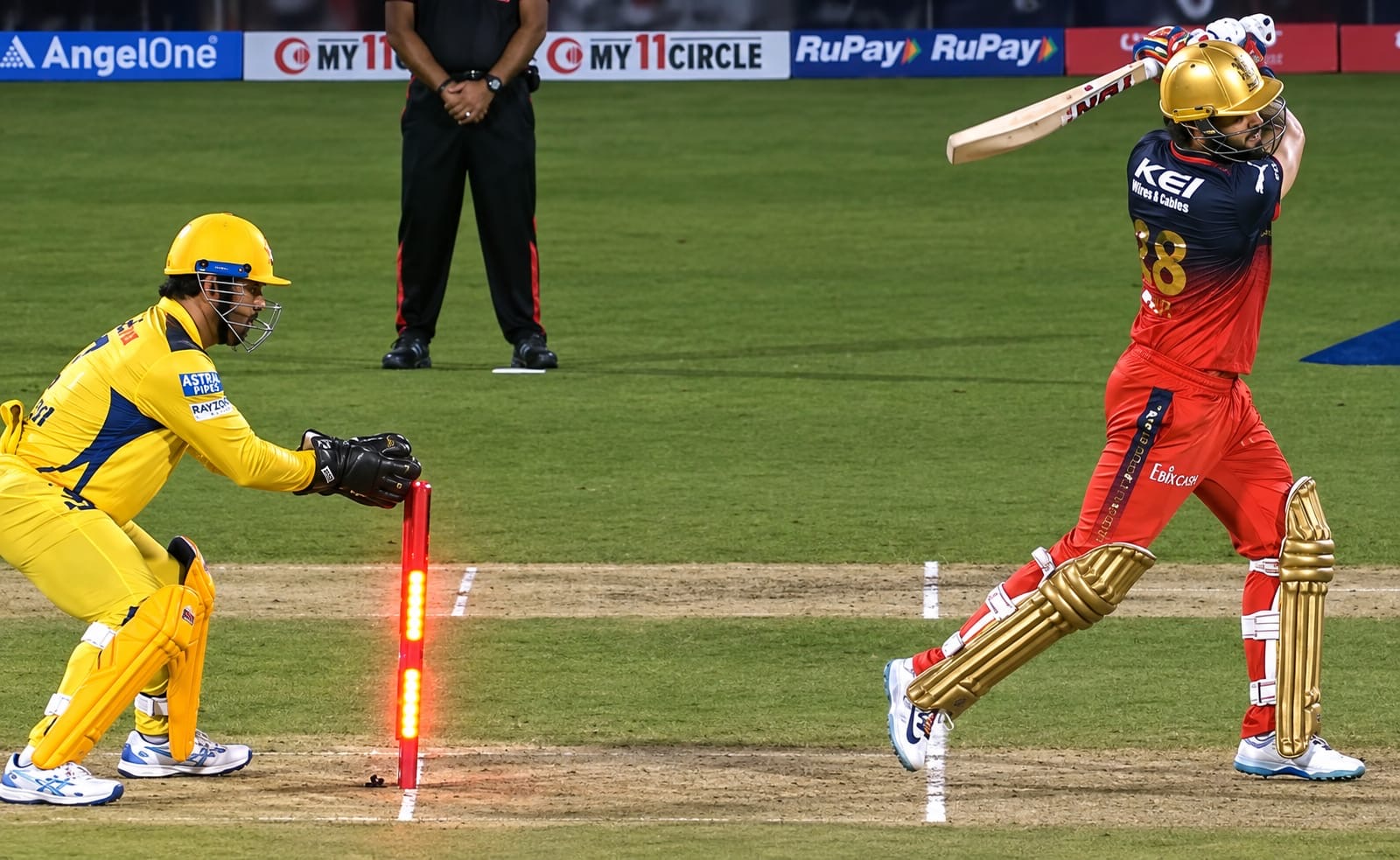
MS Dhoni stumping Royal Challengers Bengaluru (RCB) better Phil Salt during their IPL 2025 match at Chepauk on March 28.
The emotional side of Dhoni
If the on-field Dhoni was all about optimisation of time, the off-field version was no different. Most of Dhoni’s team talks at CSK lasted under a minute or two, with Arun Karthik (CSK squad member-turned-fielding coach) distilling Dhoni’s approach further: routine conversations should take no longer than 15 seconds, difficult ones can last for 50 seconds.
A difficult conversation needed to be had when CSK returned to the IPL in 2018, following a suspension of two years after franchise official Gurunath Meiyappan (son-in-law of CSK owner and former BCCI President N. Srinivasan) was found guilty of spot-fixing. As captain, Dhoni spoke on record for a CSK documentary (co-produced by Dhoni Entertainment), but did not give any media interviews. This being Dhoni, few journalists had the temerity to bring up awkward questions to him during press conferences before and after matches.
But the generally taciturn Dhoni got emotional when he spoke at length to his teammates before the start of the 2018 season (as recollected by teammates Shane Watson and Michael Hussey), underlining the need to come back strong. Derided as “Dad’s Army” for having an average age of 34, CSK went on to beat Sunrisers Hyderabad to claim another title that year.
This was not the first time Dhoni had shown emotion for CSK, something he was more prone to doing in yellow than in the blue of India. In a 2019 encounter, Dhoni, despite already being dismissed, had marched out to the ground to confront the umpires in a fiasco that dented his Captain Cool image, albeit briefly. Back in 2010, he had punched his own helmet after his quickfire knock saw CSK over the line in a do-or-die match against Punjab.
Perhaps the CSK jersey allowed Dhoni a chance to be his natural self more than the colours of India, where every twitch of his muscles was scanned forensically. For India, Dhoni’s mantle appeared to be that of duty, harnessing a well-oiled machine towards its full potential. For CSK, Dhoni’s mandate was that of care, ensuring a family found new ways to evolve and remain relevant.
This care stemmed from a comfort within the CSK setup, which allowed Dhoni to do as he pleased. No matter his age or form or the team’s results, CSK remained Dhoni’s team through and through. In fact, it is hard to think of another personality in the modern era who stamped their authority on a sports team as much and for as long as Dhoni did with CSK. One could point to Sir Alex Ferguson at Manchester United as the closest parallel this century. Like Ferguson for the Red Devils, Dhoni’s way became the CSK way, not the other way around. Sometimes this involved Dhoni ceding charge to the likes of Suresh Raina and Ravindra Jadeja to rise as protagonists. On occasions, it meant trying out Ashwin as an opening bowler or using Ajinkya Rahane as a pinch-hitter. At other times, it was simply about Dhoni exuding his aura, gesticulating gently to his fielders, and playing mind games based on second-guessing his rivals. All of this fed into the culture of CSK’s captain as both a cult figure and the group’s conscience keeper.
This, ultimately, was how Dhoni rewrote the IPL playbook. He set the blueprint, yet to be followed since, for an entire franchise to revolve around one man. Even when his ways were unorthodox or inscrutable. And he made it work for the most part.
Mahi, the mentor
In an era of hyperquantification, when IPL players are frequently overloaded with data, Dhoni’s X-factor as CSK mentor may just be to guide them back to their instincts. To help them map moments in games in terms of temperament, not just in terms of probabilities and percentages.
In one of his rare interviews while he was India captain, Dhoni had revealed how he always preferred to drag a game to its bitter end because he believed the opposition’s nerves would give way before his. It is this lesson in self-belief that Dhoni will look to transmit to CSK’s next generation.
From a brand perspective, Dhoni staying on in the CSK setting is the biggest silver lining to come out of the player’s retirement. As long as cameras can point to Dhoni chatting to someone in the dressing room or the dug-out, eyes will flock to screens, and money will flow.
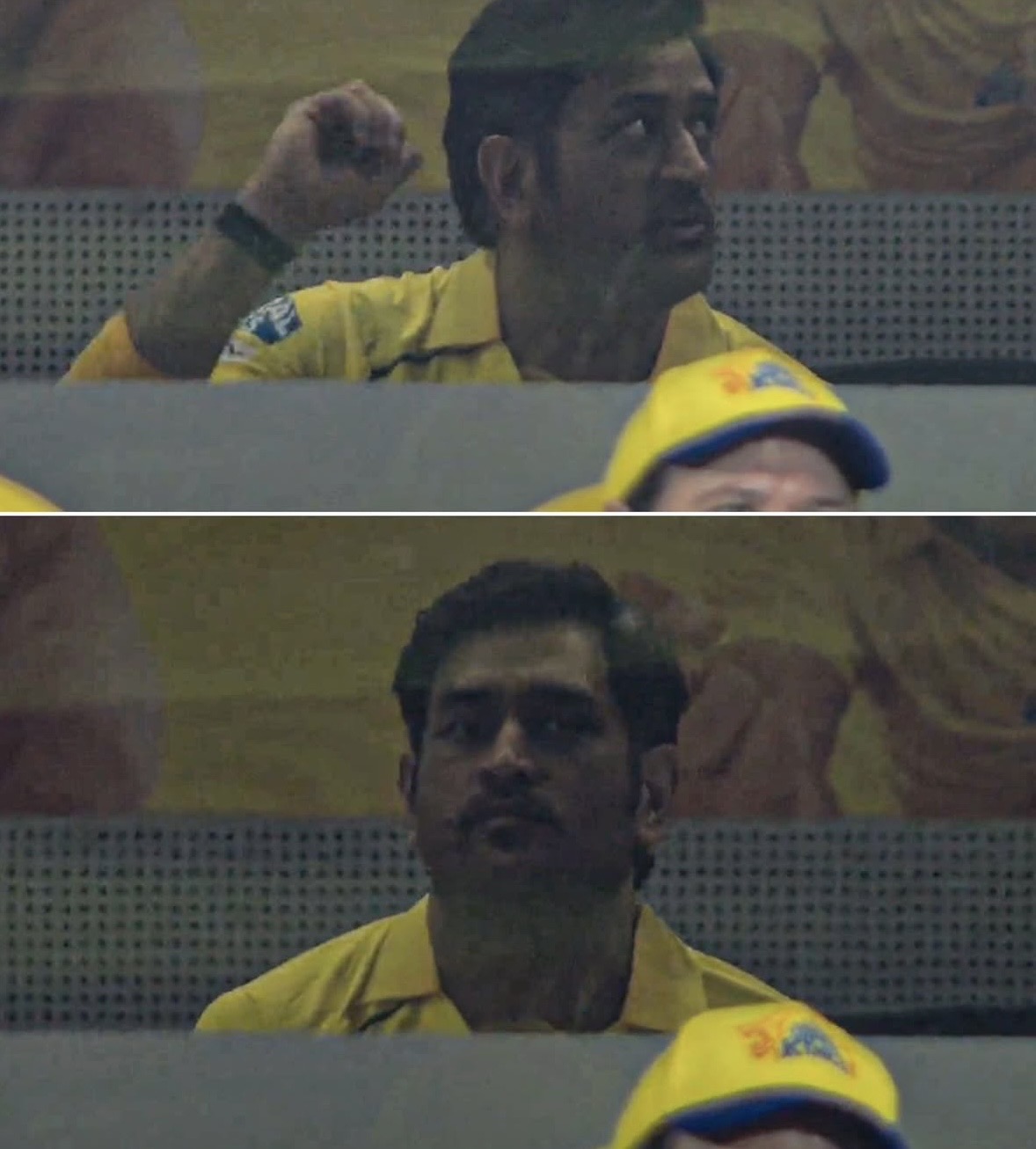
MS Dhoni watching CSK vs SRH clash from the dressing room (2026).
Not playing may also give Dhoni the bandwidth to get involved with CSK’s content ecosystem. While it is unlikely that Dhoni will have his own podcast or be available to share his takes with commentators during innings breaks, expect CSK to leverage his mentorship status with fan interactions, exclusive insights, and social media plug-ins at every possible step.
But no matter what rabbit Dhoni, the mentor, pulls out of his hat, it will be no substitute for the sheer joy he provided as a player. Having started his journey as the most expensive buy at the inaugural IPL auction, with a promise to win trophies for his team, Dhoni led by example, and often without precedent. His was the ability to defy trends and reputations, to probe the psychology of players, and, for the most part, to stay one step ahead of cricket’s quickest format.
None of that, though, provides a reliable template for success. Dhoni’s biggest playbook trick may well have been that he was the only one capable of succeeding by his own rules.
