Bulldozers against books: how one doctor turned reading into an act of protest
Amid reports of bookstall vandalism across West Bengal, ophthalmologist Ashok Kumar Bhakta has chosen an unconventional form of protest: buying books from Left-wing stalls and distributing them among passers-by to defend the freedom to read and encourage independent thinking.
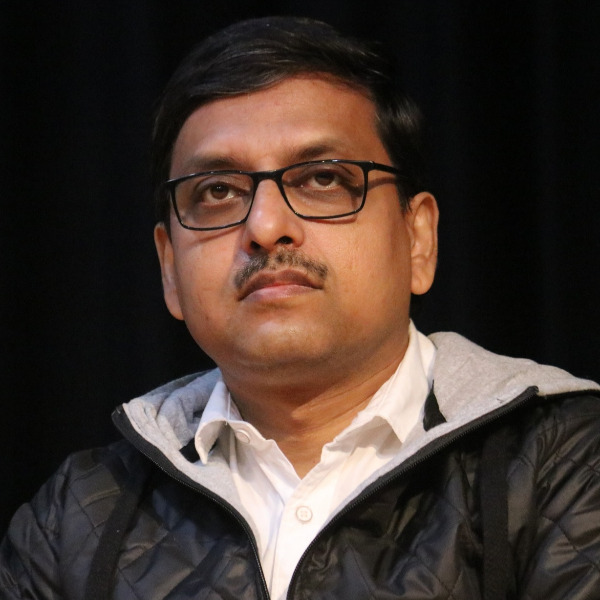
Amid the controversy over the vandalism of bookstalls run by various Left-wing political organisations across West Bengal, ophthalmologist Ashok Kumar Bhakat has chosen an unconventional form of protest. No marches, no slogans and no political banners. Instead, he has decided to buy all the books from these stalls and distribute them among ordinary people. He believes there is nothing wrong with selling books, reading them or learning about an ideology of one’s choice. On the contrary, reading, he argues, broadens knowledge and strengthens critical thinking. Speaking to Inscript, Bhakat explained his initiative, making it clear that he acted entirely on his own, neither as a member nor as a supporter of any political party.
Ashok Kumar Bhakat currently lives in Berhampore. Although his professional life keeps him occupied with his own chamber and hospital duties, he makes time to follow the news and current affairs. He says the reports of bookstalls being vandalised in different parts of the state prompted him to think of an alternative way to register his protest. In his view, protest can take many forms. Some people organise marches, others hold meetings or submit deputations, while some choose legal avenues. He decided to express his dissent in a way that suited his profession and personal means: by buying books and placing them in the hands of the public.
How did the initiative begin? Bhakat says he first visited a stall run by the Paschim Banga Vigyan Mancha, where he purchased books worth approximately Rs 15,000 to Rs 20,000. He then distributed them among passers-by. Subsequently, he bought books from a stall run by Yuva Shakti and handed those out as well. He later undertook a similar initiative at a stall belonging to the Socialist Unity Centre of India (SUCI), he says. Bhakat emphasises that he has no organisational affiliation with any of these groups. He visited the SUCI stall after learning that it had been vandalised. His objective, he maintains, was not to campaign for any political party but to defend the freedom to read and encourage the habit of reading.
“I can register a silent protest. Since I have some money, I can spend it by visiting one stall at a time, buying all the books there and distributing them among passers-by. That is my silent protest,” Bhakat says. He believes that no obstacles should be placed in the way of selling or reading books. If a book contains objectionable or unlawful material, appropriate action can be taken in accordance with the law. However, he opposes indiscriminately stopping the sale of books or vandalising stalls because of their content or the ideological convictions of their authors.
Bhakat is also reluctant to view the incidents involving bookstalls merely as a question of encroachment on footpaths or the removal of roadside shops. In his view, if there are administrative rules governing the use of footpaths, such disputes should be resolved through lawful procedures. Rehabilitation may also be considered where necessary. But selling books or reading literature associated with a particular ideology should not be treated as an offence. Speaking to Inscript, he asks, “Why should Marxist books not be sold? What has Marx done wrong? Let people read them and find out for themselves.”
According to Bhakat, reading a book does not automatically make someone a supporter of the ideology it represents. Access to different viewpoints, philosophies and schools of thought is essential. People should have the opportunity to engage with ideas, examine their arguments and form their own opinions rather than being denied access to them.
Explaining his perspective, Bhakat also refers to his experience of reading religious texts. Although he grew up in a Hindu family, he has read the Quran and keeps a page from it in his chamber. Reading the scriptures of another religion, he argues, does not mean converting to that faith. The same principle, he believes, should apply to Marxism, the writings of Lenin and other political philosophies. Differences over the contents of a book are inevitable, but such disagreements should be addressed through discussion and reason.
Bhakat is also concerned about the declining habit of reading. In his view, many people today spend long hours on their mobile phones. Against this backdrop, he considers the act of selling and buying books a positive development. Reading expands knowledge and broadens the scope of thought. He believes that cultivating a reading habit is essential to developing educated and aware citizens. Rather than becoming embroiled in ideological conflicts, he argues, greater attention should be paid to encouraging young people to study, attend schools and colleges, and build opportunities for their future.
Bhakat repeatedly stresses that his initiative has no organisational connection with any political party. He does not wish to identify himself as a member or supporter of any particular party. Instead, he has sought to demonstrate an alternative form of protest within his own means. “I am an eye doctor. Since I operate on people’s eyes, I wanted to open people’s eyes to the fact that protest, too, can take different forms,” he says.
Although professional commitments and physical limitations make it difficult for him to participate in conventional forms of agitation, he believes that buying and distributing books allows him to communicate his position to the public.
Bhakat has also expressed his disappointment with the political situation in the state. He says that even after voting against the previous government, he remains dissatisfied with the present circumstances. In his view, no government or ruling establishment should behave in an authoritarian manner. Everyone should have the right to live freely and participate in a democratic society. Although he does not wish to present his initiative as part of any political programme, his protest against the vandalism of bookstalls raises broader questions about freedom of expression, the right to read and democratic rights.
For Bhakat, buying books from bookstalls and distributing them among ordinary people is more than a book-distribution drive. It is a form of silent protest. By standing outside the immediate conflict between competing political ideologies, he hopes to make a case for the freedom to read and the pursuit of knowledge. He believes that the more people read, the more they learn to think for themselves. And the freedom to think, he argues, is one of the essential foundations of an informed and conscious society.