The horse, the pin and the many Odysseys
Christopher Nolan's The Odyssey is less an adaptation than a translation—and every translation frays its original. Through the Trojan horse, Penelope's pin, and Odysseus' silences, this essay explores memory, guilt, language, and loss, while questioning the omissions that shape Nolan's epic, from the hanging of the twelve maids to the erasure of competing narratives.
The classicist and translator Emily Wilson’s reading of Odysseus as a ‘complicated man’ in her 2017 English translation of the Greek epic Odyssey served, by Nolan’s own admission, as the warp thread around which he spins the weave of his recent film The Odyssey. However in her scathing review of the film, ‘An Uncomplicated Man’, Wilson, ashamed to have played any part in Nolan’s retelling, ruefully enlists an array of textual digressions including alternative readings of major characters, missing episodes, absence of sex, the poor standard of Greek carpentry and even the missing wheels of the wooden Trojan horse which, Wilson asserts, drown out Nolan’s (and by extension Odysseus’) story. Notwithstanding the anxiety of self-loss with which Wilson perhaps grapples, these disjunctive deviations in decentering the primacy of the ‘original’ at once bring to the fore the inherent subversive potential of the ‘original’ which because of its very condition as text, enables it to be something other than itself. In her rejoinder to Wilson, the novelist Joyce Carol Oates reminds the former of the task of the translator and celebrates the radical deconstructive release beyond the intention or awareness of the ‘original’, as innate to any form of interpretative rewriting and Nolan’s cinematic adaptation, in her opinion, is no exception. What happens to the urtext (Homeric? Or those mythical traditions predating him?) rooted in the polyphonic heterogeneity of orality as it adapts to the demands of a new medium may be compared to what Spivak calls a risky act of fraying the selvedges of a text(ile) by an agentic but sahṛdaya reader-translator during the complex process of cultural transference. This transgressive fraying to which a text offers least resistance is, as Spivak identifies, a consequence of a surrender on the part of the translator through an intimate act of reading, whereby the being of the ‘original’ navigating an intertwined semiotic spiral of loss and gain, is at once threatened and extended. Is Nolan’s adaptation emblematic of the lack of intimacy that Spivak despises as violence or is his creative rewriting responsive to the unique demands of the text, accessible only to the intimate reader passionately engaged in a meaningful dialogue? These questions, I contend, are inextricably linked to the fraying of the ‘original’, which when seen in conjunction with Odysseus’ immense sense of guilt, of which the imposing wooden horse in Nolan’s narrative remains a metonymic reminder at the limits of language, inevitably draws our attention to the irreducible difficulty of converting physical space and experience into the indeterminable but ironically inadequate semiotic realm of language, even for the legendary wily raconteur. This continuous, inadequate and reductive translation of the physical world and its experiences into a singular linguistic habitus constitutes the unique human incapacity of inhabiting the world unmediated through language. Domiciled in language even the witty Odysseus fails to comprehend divine communication for he never really succeeds in engaging with an immediate and unmediated experience of thunder or fire; for him as for all mortals, elemental nature in all its immediacy remains impenetrable because its experience is always already structured through a linguistic mediation and its consequent deferral.
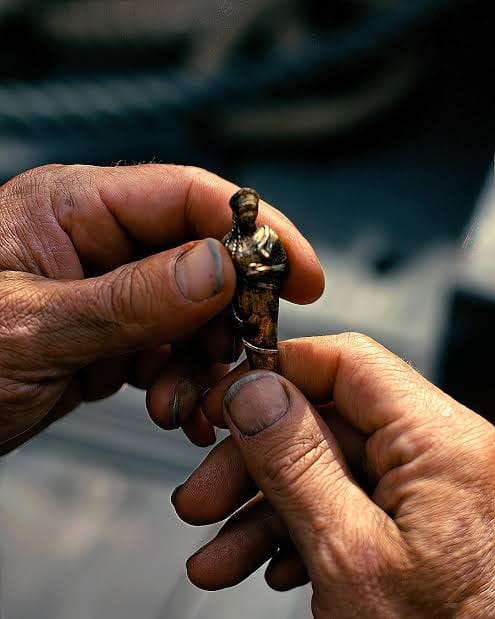
Nolan builds on this essential rupture and pits the trickster and the crafty storyteller, Odysseus’ delayed homecoming and the lone survivor’s account of his arduous journey against the impossibility of retaining the irreducible plurality of the linguistic domain in translation and sees him falter almost immediately. Disguised as a beggar who once served under Odysseus in the Trojan War, Odysseus as the veteran, at Penelope’s behest, recounts his experience of Odysseus but talks not of his military genius or his famous victory at Troy but of a strange pin, a figure of Athena encircled by vines, that Odysseus never took off and of a man’s trick that violated all that is ever sacred between people. The discursive Odysseus that emerges from this retelling, in embracing fidelity (Penelope’s pin) and treachery (the wooden horse) appears almost as a meta-commentary on the process of translation itself. The pin and the horse lying at the threshold of language also metonymically recall the fall of Troy, which the master storyteller in Odysseus, despite his best efforts at representation/translation, however (in)authentic, fails to contain and control.
The disguised Odysseus as the meta-discursive yarn spinner noted for his vivid silences, almost inevitably reminds us of the auteur-translator Nolan and how his politics of representation is deeply informed by discursive amnesia evident in the radical and violent effacement of all those mnemonic traces that cannot be reduced to archival documentation. I will point out instances of two such foreclosures in Nolan. After slaughtering the suitors, Odysseus (and his son Telemachus) brutally hangs the twelve maids of Penelope (her constant companions during the most trying times) for their ‘disloyalty’. They were even denied burial rites. In The Penelopiad (2005), Margaret Atwood’s retelling of Homer’s Odyssey, the twelve shades from Hades claim in unison the sacrosanct status of the sacrificial figure reserved solely for Iphigenia across canonical narratives including Nolan’s. No wonder, Nolan does not also mention Penelope’s dream where a giant mountain eagle (Odysseus) kills all her pet geese (suitors) and the queen weeps bitterly.
In Nolan’s retelling burial rites remain central to the narrative. As Odysseus and his men visit the Hades, the shades in the underworld clamour for their burial rites. Argos is given a proper burial even at a moment of crisis and Odysseus, at the end, set sail for the west to honour his fallen crew with proper (albeit deferred) obsequial ritual. But the twelve maidens and their hanging, are not even obliquely mentioned in Nolan, while Odysseus and Penelope, gravely concerned with the collapse of hospitality, are championed for their fidelity. Ironically the breaking of Zeus’ law as the utter violation of the rituals of hospitality leading to collapse of the Mycenaean Bronze Age, begins with Odysseus’ trick of the wooden horse, a calculated maleficent ruse as opposed to its claimed sacred status of an offering to Athena. Perhaps Circe in her deceitful avatar as a hospitable hostess, comes closest to Odysseus’ trick and the episode is remarkable in underscoring the innate human depravity as she refuses to accept Odysseus’ charge of transforming his men into filthy hogs by asserting “this is who they really are…base, disgusting”. As Odysseus ‘knows’ his men through an animal metamorphosis occasioned by Circe’s intervention, so do we come to ‘know’ a text through repeated acts of multiple (re)readings and (re)rewritings. These repetitions like the many later retellings of the Circe episode be it in Pliny, Plutarch or Machiavelli where Gryllus and other fat hogs reject the offer of restored humanity claiming their superior animal condition, vividly inform our understanding of the predicament of the human in the Odyssey. Nolan’s narrative, however, refers to none of this subsequent (re)readings.