'Ismat aapa ke naam': When Ismat Chughtai walked into cinema
What happens when a woman refuses to keep the 'personal' private? On Ismat Chughtai’s birth anniversary, we revisit how her stories of desire, marriage, patriarchy and rebellion moved from Urdu pages to cinema and theatre — and why they still unsettle.
What happens when a girl who spent her childhood imagining the dramatic versions of stories grows up to write about everything society wants kept behind closed doors?
Ismat Chughtai did not merely write about women. She watched them — their marriages, desires, humiliations, friendships and silences — and turned those private lives into public stories. Decades later, those stories would move from the Urdu page to cinema and theatre.
Born in 1915, Chughtai grew up questioning rules that came naturally to the world around her. She wanted an education when girls were expected to prepare for marriage; she climbed trees, cycled and rode with her brothers, and resisted being told what a proper girl should be. At Aligarh, the influence of Rashid Jahan and the Progressive Writers’ milieu widened that rebellion into a political consciousness shaped by equality, education and social reform.
But Chughtai’s politics did not remain in manifestos. They entered the household.
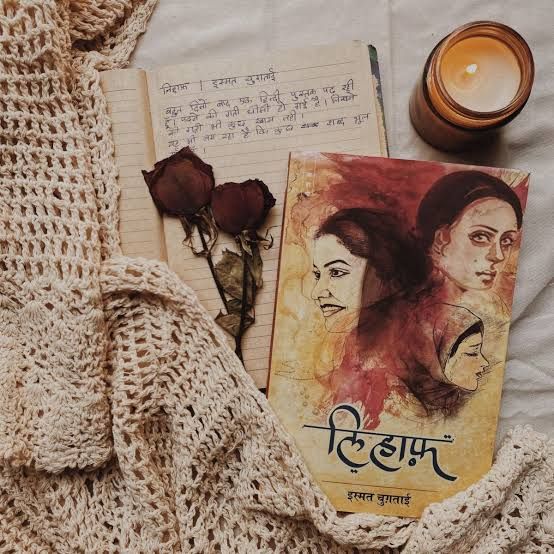
Her stories made the home political. In Gainda, a young lower-caste widow is punished after becoming pregnant by a man who escapes the consequences. In Lihaaf, a neglected Begum Jan finds a forbidden intimacy inside a patriarchal household. The questions were deceptively simple: Who gets to desire? Who gets punished? And why is a woman’s body treated as a site of family honour and social control?
That was what made Chughtai so unsettling. She wrote about sexuality without surrendering her characters to spectacle, and about oppression without reducing women to helpless victims. Her own description of her mind as an ordinary camera that recorded reality captures something central to her method: she looked at what respectable society preferred not to see.
Then came cinema.
After marrying filmmaker Shahid Latif, Chughtai entered Bombay’s film world, working across stories, screenplays and dialogues and contributing to films including Ziddi, Aarzoo, Sone Ki Chidiya, Faraib, Garam Hawa and Junoon. Her cinematic journey mattered because the questions that had lived inside her fiction could now reach a mass audience.
Her cinematic journey also carried her politics into larger questions of society. Garam Hawa, based on her unpublished story and adapted for the screen by Kaifi Azmi and Shama Zaidi, turned the aftermath of Partition into a story of displacement, belonging and the struggle to remain. Decades after Chughtai had written about the intimate politics of women's lives, the screen was now carrying her gaze into the fractures of a newly divided country. Sone Ki Chidiya, is another example that turned its gaze towards exploitation within the film industry itself. Her concern was not confined to the women’s quarters, even though gender, class and social power remained central to the worlds she created.
Chughtai did not simply hand her stories over to cinema. She entered its machinery herself. Beginning with script and dialogue work in the 1940s, she went on to produce and co-direct Fareb in 1953, produce Sone Ki Chidiya and Lala Rukh in 1958, and later direct Jawab Ayega. Her collaborations made cinema another space in which she could exercise the control and independence she had fought for in literature.
And then her stories returned to the stage.
Naseeruddin Shah’s Motley productions, including Ismat Apa Ke Naam and later Aurat! Aurat!! Aurat!!!, brought Chughtai’s autobiographical writing and fiction into live performance. Women who once existed in the intimacy of Urdu prose could now speak, move and confront audiences directly.
That afterlife may be the most revealing part of Chughtai’s legacy. Her stories survived not because their questions became outdated, but because they did not.
The woman who once refused to accept that education, desire or independence were inappropriate for a girl eventually became a writer whose private worlds exposed public structures of power. Cinema and theatre did not simply adapt Ismat Chughtai. They gave her questions another body, another voice and another audience.
And perhaps that is why, decades after her death, Ismat is still walking onto the stage and screen — asking questions that were never as private as society wanted them to be. She did not simply write about the private becoming political. She made the private, impossible to ignore.