Lagaan and Dil Chahta Hai at 25: Reassessing the legacy of two landmark films in Hindi Cinema
Lagaan and Dil Chahta Hai at 25: Twenty-five years later, a reassessment of two films that changed Hindi cinema and why their historical importance may have outstripped their artistic achievement.
Lagaan and Dil Chahta Hai— both released in 2001.
Twenty-five years can do strange things to our memory of a film. What once seemed inseparable from greatness may, with distance, reveal itself as something more complicated: the excitement of discovering a film at exactly the moment when we were ready for it. Something about the film, something about the time, something about ourselves comes together and, for a while, it becomes impossible to separate the three.
That was how I experienced Lagaan and Dil Chahta Hai in 2001. I loved them, completely and unreservedly. I thought they were great films. More than that, I thought they represented something new in Hindi cinema. Twenty-five years later, I find myself arguing with my younger self.
I no longer think either film is the masterpiece its reputation has made it. Both remain important, influential and hugely enjoyable films. Both altered the possibilities of mainstream film-making. But somewhere along the way, we began confusing what these films represented with what they actually achieved. Perhaps we mistook the importance of the moment for the greatness of the films.
In 2001, Hindi cinema seemed to be standing at an interesting threshold. Liberalisation was changing lifestyles; satellite television and MTV were altering the cultural landscape; multiplexes were emerging as a new exhibition space. An increasingly affluent urban class wanted to see some version of itself on screen.
And then came Lagaan and Dil Chahta Hai, within three months of each other. One took us back to colonial India, to a drought-stricken village and a cricket match that became a battle for survival. The other took us into the lives of three affluent young men. One was a fantasy of collective freedom; the other, of individual freedom. In 2001, both were intoxicating.
Lagaan: The pleasure of a perfectly told story
I remember the experience of watching Lagaan almost as much as I remember the film. When the cricket match gathered momentum, the theatre became a stadium. We weren’t merely watching Bhuvan and his team; we were willing them to win. The premise was irresistible: villagers unable to pay an exorbitant tax imposed by their British rulers are given one impossible chance to defeat them at cricket. Ashutosh Gowariker mounted this wonderful piece of popular storytelling on an enormous canvas. At the time, its scale seemed inseparable from its greatness.
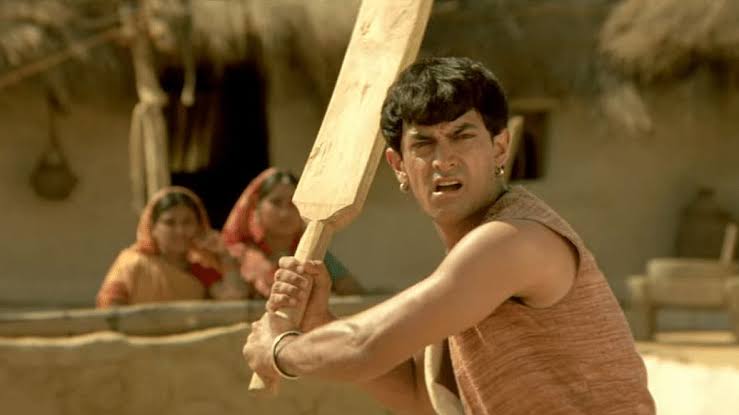
Bhuvan (Aamir Khan) prepares to take on the British in the cricket match in Lagaan.
Twenty-five years later, what strikes me is how conventional the storytelling actually is. The villagers reject Bhuvan’s proposition; he assembles a team; differences threaten to destroy it; training begins; the British seem unbeatable; and the match goes down to the wire. It is the classic underdog sports movie transferred to colonial India. The originality lies in the setting and the conceit. The emotional machinery is familiar.
Its characters, too, are less complex than I remembered. The celebration of India’s diversity was one of the things I admired most. But the characters are often required to represent ideas before they are allowed to be fully human. Kachra is the untouchable; Ismail the Muslim; Deva Singh Sodhi the Sikh. Kachra’s inclusion is particularly telling: the man excluded by caste is welcomed when his skill with the ball becomes indispensable. The gesture is progressive; the characterisation is less so.
Bhuvan is almost impossibly virtuous, while Captain Russell is pure villainy and Elizabeth the sympathetic British outsider. The historical conflict is reduced to a moral fable. Perhaps that is precisely what Lagaan needed to be to work as popular cinema. But it complicates the idea of a revolutionary masterpiece.
The film is also extraordinarily good at manufacturing emotion. Every obstacle becomes an opportunity for uplift, every difference an occasion for reconciliation. I was happy to be manipulated. I wanted the six. I wanted Russell defeated. I still do. But I don’t necessarily mistake that emotional satisfaction for complexity. Its nationalism is uncomplicated because its enemy is the British. The conflict is safely external. Caste, religion and social divisions can be suspended because there is an obvious oppressor outside the community. Lagaan isn’t interested in the conflicts within Indian society. It doesn’t need to be; it is a fairy tale. Perhaps we should stop asking a fairy tale to carry the intellectual weight of greatness.
Its nearly four-hour length has also become harder to ignore. Perhaps the most embarrassing discovery for me is that I haven’t watched the film all the way through again in 25 years. A masterpiece, I expect, should invite rediscovery, revealing something beyond the anticipation of the first viewing.
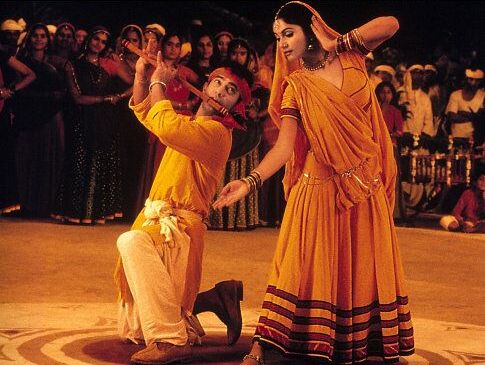
Bhuvan and Gauri (Gracy Singh) in the song ‘Radha Kaise Na Jale’ from Lagaan.
What remains is considerable: the performances, the production, A.R. Rahman’s music and the sheer ambition. It is a terrific film. I’m simply no longer convinced it is a great one.
Its Oscar nomination complicated matters further. Lagaan became more than a film; it became an Indian achievement, proof that Indian cinema could compete on the world stage. It acquired a halo and, once a film has a halo, criticism becomes strangely impolite. We begin defending what it represents rather than examining what is actually on screen.
Dil Chahta Hai: Whose new India?
My relationship with Dil Chahta Hai is more difficult because I was personally part of its early celebration. I was seduced by it when it released. I thought Farhan Akhtar had discovered the language of a new India. I wrote a paean to the film in the Hindustan Times, with the confidence of someone who believed he had spotted the future before everybody else. Twenty-five years later, I read that enthusiasm differently. I wasn’t wrong about the freshness. I was wrong about what freshness meant.
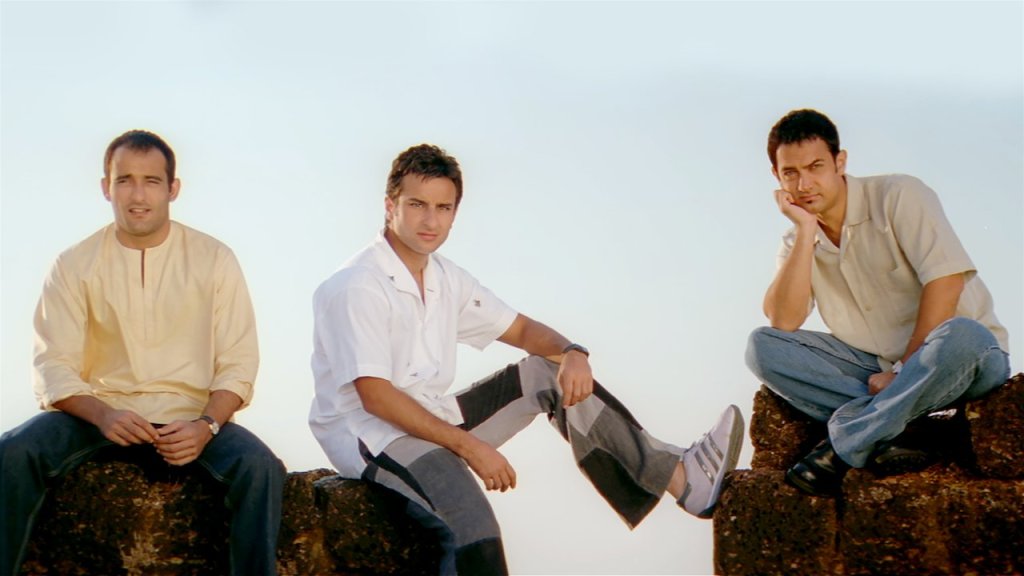
Chapora Fort, Goa — the iconic location featured in Dil Chahta Hai.
Aamir Khan, Saif Ali Khan and Akshaye Khanna looked unlike the Hindi-film heroes we had been accustomed to. They spoke differently, interrupted each other, irritated each other and shared private jokes. Their friendship felt lived-in rather than scripted. English wasn’t a badge of sophistication; it was simply part of the rhythm of their lives. The editing, split screens, clothes, the goatees, cars, Goa and production design all belonged to a cinema that had stopped looking over its shoulder.
Previous Hindi films had brought us designer clothes, foreign locations and Westernized characters. But their protagonists often had to prove that beneath the modern exterior they were still good Indian children. Dil Chahta Hai largely dispensed with that apology. Modernity didn’t need to be explained. That was the revolution.
Except that films such as Hyderabad Blues and Bombay Boys had already experimented with contemporary speech, locations and urban characters. What Farhan Akhtar did was gather these currents together and make them mainstream, aspirational and cool. He didn’t invent the new Bollywood. He gave it the confidence to enter the mainstream.
But the India he brought into that mainstream was extraordinarily small. Akash, Sameer and Siddharth have the luxury of worrying about relationships and friendship because money has insulated them from life’s harsher questions. They can go to Goa on a whim. Careers are choices. Nobody worries about rent or calculates the cost of a holiday.
A few years down the line, I remember imagining an essay on Dil Chahta Hai that I never got around to writing. Its title, or perhaps its refrain, would have been: ‘Hamara dil bhi chahta hai.’ The heart of someone less privileged also wants friendship, romance, travel and freedom. The difference is that many people cannot have this world. Dil Chahta Hai made a privileged life look like the natural condition of being young. It wasn’t. It catered to the desires of the young and the privileged. There is nothing wrong with making a film about privileged people. The problem came later, when Dil Chahta Hai became shorthand for an entire generation. It wasn’t. It was about a particular generation of affluent, English-speaking, urban Indians.
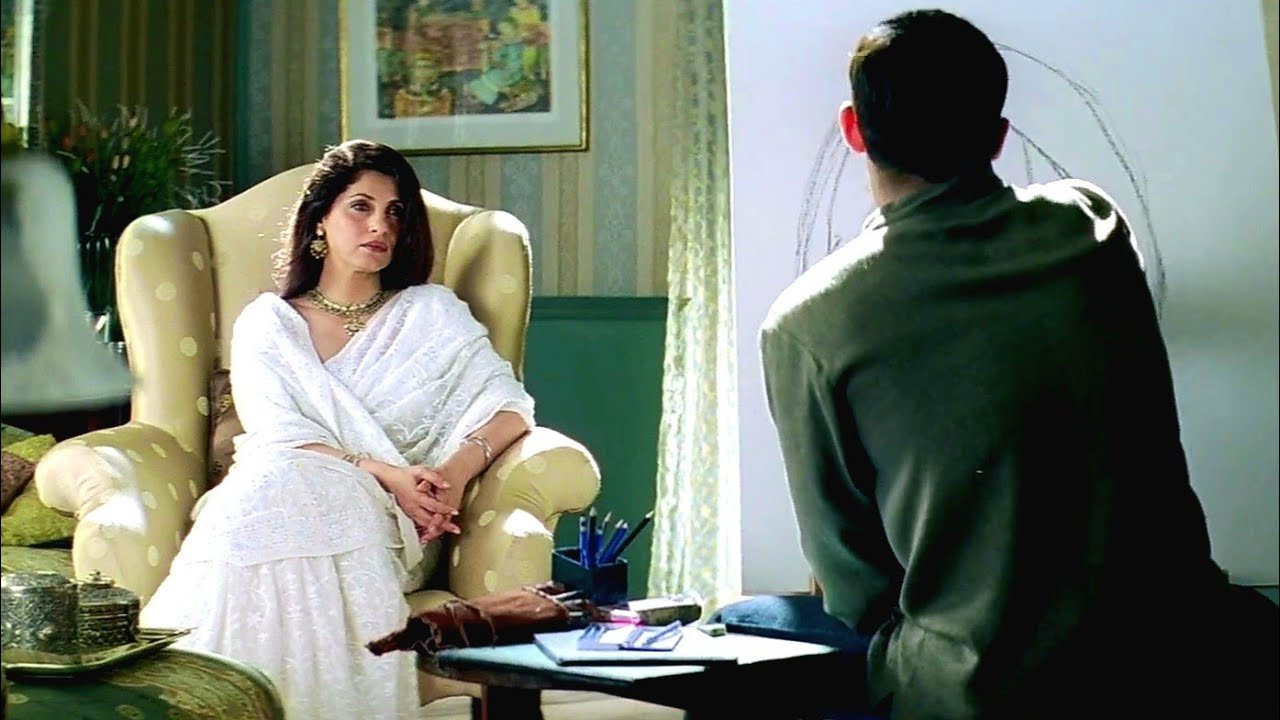
Siddharth (Akshaye Khanna) and Tara (Dimple Kapadia) in Dil Chahta Hai.
Its gender politics, too, have become harder to overlook. The men get most of the freedom. Shalini’s story contributes to Akash’s maturation; Priya exists largely within Sameer’s romantic confusion. Tara, played with enormous sensitivity by Dimple Kapadia, is perhaps the most interesting character, but even her story becomes part of Siddharth’s emotional education. The Siddharth-Tara relationship, which I found deeply moving at the time, makes me considerably more uncomfortable today. Tara is older, vulnerable, alcoholic and lonely. The film’s romantic framing largely avoids examining the power dynamics underneath.
And yet, Dil Chahta Hai remains wonderful when it is doing very little. The conversations, jokes, silences and small moments of friendship are still the film. When it reaches for its big moments, however, it often falls back on conventional Hindi-film machinery. The film that appeared to have escaped Bollywood occasionally remembers that it is Bollywood.
The Burden of being important
Both films created persuasive worlds by simplifying the contradictions within them. Lagaan could construct an uncomplicated idea of Indian unity because its enemy was outside the community. Dil Chahta Hai could construct an uncomplicated idea of youthful freedom because the economic conditions that made such freedom possible were outside the frame. One externalized the political conflict; the other erased the class conflict. And yet we loved them partly because we wanted those simplifications to be true.
Lagaan announced that Indian cinema could make an epic and take it to the world. Dil Chahta Hai announced that Hindi cinema could be young, urban, bilingual and contemporary. We were hungry for both announcements. They arrived at exactly the right moment to become symbols.
Perhaps what we remember as invention was sometimes consolidation: several things that had been happening separately suddenly arrived in the same film, with enough confidence and commercial force to make them impossible to ignore. That is a significant achievement. It just isn’t automatically greatness.
History asks: What did this film make possible? Art asks: What does this film contain? The answers aren’t necessarily the same.
Curiously, the music has survived my disenchantment. With Lagaan, it is Rahman’s ‘Ghanan Ghanan’, ‘Mitwa’ and ‘O Paalanhaare’. With Dil Chahta Hai, it is ‘Dil Chahta Hai’, ‘Jaane Kyun’, ‘Woh Ladki Hai Kahan’, ‘Tanhayee’ and ‘Kaisi Hai Yeh Rut’. I can listen to these songs without wanting to qualify my affection. Perhaps the songs were never carrying the burden of representing an era. They were simply songs.
Take away the novelty, the first viewing, the Oscar nomination and the feeling that something historic is happening. Take away twenty-five years of people telling you these are masterpieces. What remains? With these two films, quite a lot remains. But not, for me, the masterpieces we have made them out to be.
I can now see the formulas in Lagaan, its emotional manipulation and schematic characters. I can see the privilege in Dil Chahta Hai, its narrow social universe and limitations in imagining women. But I don’t want to erase what I felt then. That would be another kind of dishonesty.
The films mattered. They changed things. They opened doors, gave film-makers permission to try something different and audiences the exhilarating feeling that Hindi cinema was capable of moving forward. What I no longer believe is that moving forward automatically makes a film great.
So I am taking Lagaan and Dil Chahta Hai off the pedestal. Not throwing them off it. Just bringing them down to eye level. Let Lagaan be a terrific, overlong sports epic whose historical simplicity is disguised by its enormous charm. Let Dil Chahta Hai be a wonderfully fresh, hugely influential and deeply privileged urban coming-of-age film. Let us admire what they changed without pretending everything about them was new. Let us love the songs without having to love every minute of the films.
Perhaps what I was really in love with in 2001 wasn’t entirely Lagaan or Dil Chahta Hai. It was the feeling that something was beginning. Something was beginning. We just mistook the beginning for the destination.